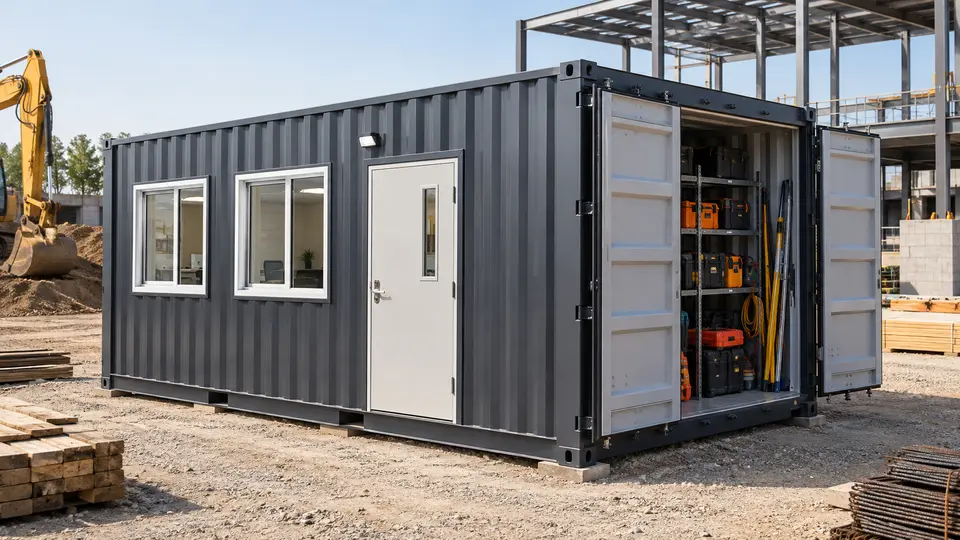
A jobsite office container can keep project management and secure storage close to the work. Instead of separating paperwork, meetings and valuable equipment across multiple temporary structures, a well-planned unit can divide one footprint into office and storage zones.
The goal is not to squeeze two uses into a box. It is to control who enters each area, protect stored materials and give field staff a functional place for plans, calls and coordination.
Divide the Space Deliberately
A partitioned layout can place a finished office near a personnel door while preserving cargo-door access for tools and materials. The percentage devoted to each use should reflect the project. A superintendent who holds meetings may need more office space than a crew that mainly needs document storage.
Plan shelving, racks and work surfaces before electrical outlets and lights are located. Keep egress routes clear and avoid storing materials where they interfere with doors, panels or HVAC equipment.
Support Field Operations
Reliable power, lighting, internet and climate control make the office useful throughout the project. Equipment loads, temporary electrical service and data connections should be planned by qualified professionals for the site conditions.
Exterior features matter too. Safe stairs, landings, handrails, lighting and a stable walkway help the unit function during rain, mud and low-light work hours.
Place It for Access and Security
The office should be easy for authorized staff and deliveries to reach without sitting in the path of heavy equipment. Consider sight lines to gates and active work areas, while maintaining required clearance from hazards.
A level base and good drainage protect the container and help the doors operate. If the unit will move between projects, document connection points and keep the surrounding setup straightforward.
Questions to Answer Before You Start
- What proportion should be office versus storage?
- Which tools or records need restricted access?
- Where will temporary power and data originate?
- How will workers enter safely in poor weather?
- Can trucks place and later retrieve the container?
Turn the Concept Into a Site-Specific Plan
Commercial and workspace projects should be planned around occupancy, accessibility, fire safety, utilities and the daily operating process. Confirm local approvals before fabrication so doors, service windows, stairs, HVAC and electrical equipment do not have to be redesigned after delivery.
Document staff count, visitor flow, inventory, equipment loads and security needs in a short project brief. That information gives the container supplier, designer and trades a shared basis for recommending size, condition and modifications.
Choose the Container Condition With the End Use in Mind
Cargo Worthy containers often provide a useful balance for commercial applications, while a custom office build may call for a newer-looking shell. Conex Xpress offers custom office options and professional delivery and placement. Review the Conex Xpress container condition guide for the differences among One Trip, Cargo Worthy and Wind and Water Tight containers.
For office-oriented projects, see the available custom office container options. Other uses should be discussed directly with the team so availability and scope are not assumed.
Related Container Ideas
- Shipping Container Office Ideas: From Backyard Workspace to Jobsite Office
- Backyard Container Office: A Dedicated Workspace Without Adding Onto Your House
Plan the Container and Delivery
Confirm zoning, permits, foundation requirements, utilities and professional design needs before purchasing or modifying a container. When you are ready to discuss size, condition, quantity, delivery location and timing, request a quote from Conex Xpress.
Before delivery day, verify the route from the road to the placement area, including gates, turns, slopes, overhead lines and tree limbs. The final location should be accessible, level and prepared for drainage. Sharing photos and accurate measurements early helps the delivery team evaluate placement without relying on assumptions.