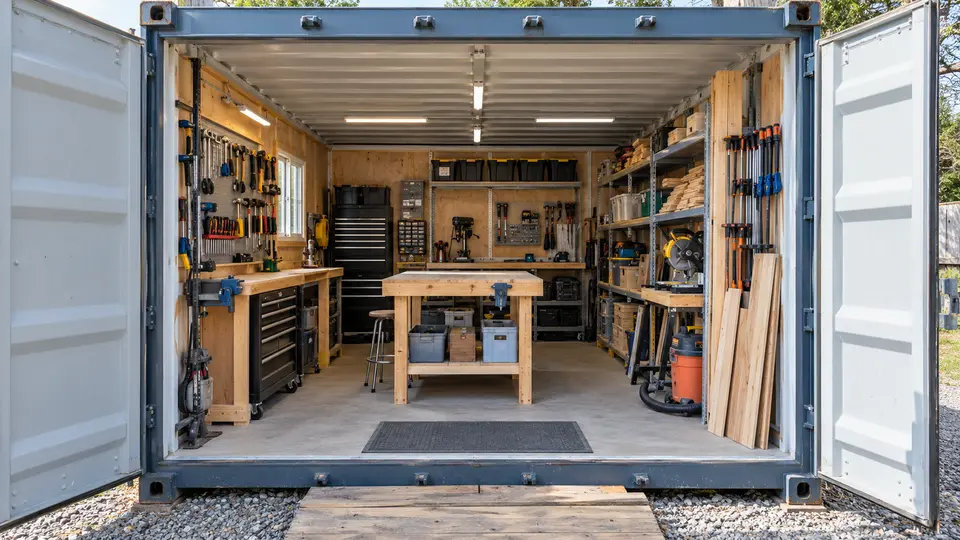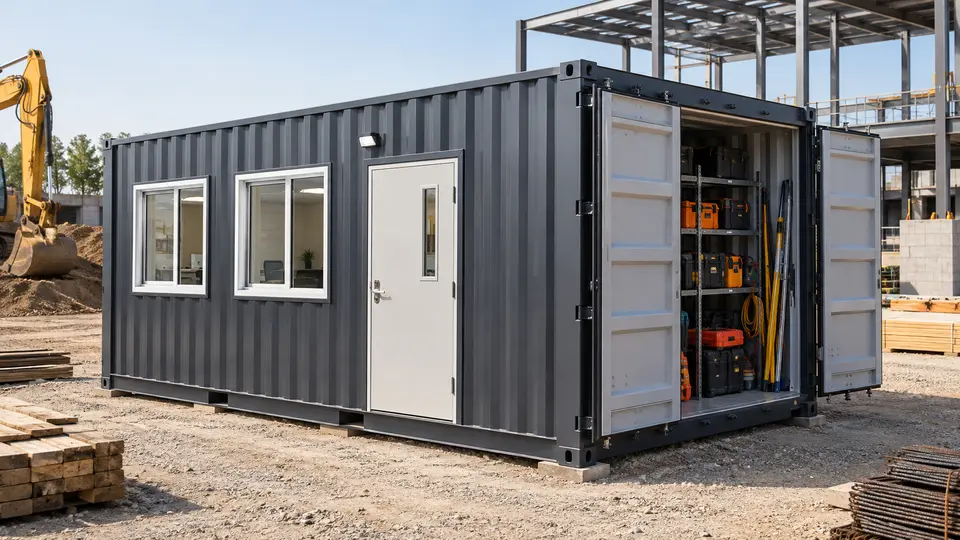
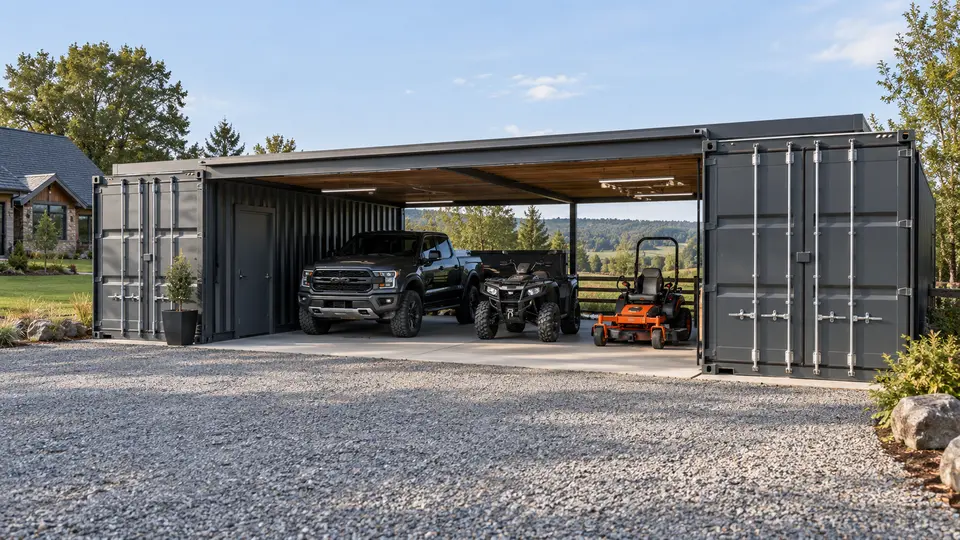
A shipping container garage can provide secure storage for motorcycles, ATVs, mowers, tools and equipment. Standard cargo doors make the shell naturally useful for many machines, but not every vehicle or maintenance task fits comfortably inside a single container.
Dimensions, door clearance and the space needed to walk around equipment should be checked before choosing a unit. For larger vehicles, paired containers with a professionally designed roof between them may be more practical than forcing the entire garage into one narrow interior.
Measure More Than the Vehicle
Record the vehicle’s width, mirror clearance, height and turning path. Add room to open doors, load gear and perform the maintenance you expect to do. A machine that technically fits may still be frustrating or unsafe to use in the space.
Plan racks for helmets, fuel-free accessories, lawn tools and parts so they do not project into the travel path. Marking zones on a scaled plan is an easy way to catch conflicts.
Choose an Access Strategy
Cargo doors provide a wide opening but require swing space outside. A professionally installed roll-up or personnel door can change daily access, though every cut opening requires appropriate structural reinforcement.
The approach should be firm, level and drained so equipment can enter without tracking water or mud inside. Consider the slope and traction at the threshold.
Manage Air, Moisture and Safety
Engines, batteries, fuels and maintenance activities introduce ventilation and fire-safety considerations. Follow manufacturer guidance and local requirements for any hazardous materials, charging systems or powered equipment.
Condensation can damage tools and vehicles even when the container does not leak. Insulation, ventilation and humidity control should match the climate and the value of what is stored.
Questions to Answer Before You Start
- Will the doors and approach clear the largest machine?
- Is room needed for maintenance or only storage?
- How will batteries and equipment be ventilated?
- What shelving can stay outside the vehicle path?
- Does the site provide a level, drained approach?
Turn the Concept Into a Site-Specific Plan
Storage and workshop projects still need a site plan. Confirm the base, drainage, door-swing area, delivery route and any required permits before the unit arrives. Electrical work, ramps, shelving and mechanical ventilation should be designed for their actual loads and uses.
Create an inventory and scaled layout before filling the container. This protects the central aisle, keeps heavy items in appropriate locations and shows whether a 20-foot or 40-foot unit will support the workflow.
Choose the Container Condition With the End Use in Mind
Wind and Water Tight containers can be practical for functional equipment storage when cosmetic wear is acceptable. Cargo Worthy may be preferred when structural condition or appearance carries more weight. Review the Conex Xpress container condition guide for the differences among One Trip, Cargo Worthy and Wind and Water Tight containers.
Related Container Ideas
Plan the Container and Delivery
Confirm zoning, permits, foundation requirements, utilities and professional design needs before purchasing or modifying a container. When you are ready to discuss size, condition, quantity, delivery location and timing, request a quote from Conex Xpress.
Before delivery day, verify the route from the road to the placement area, including gates, turns, slopes, overhead lines and tree limbs. The final location should be accessible, level and prepared for drainage. Sharing photos and accurate measurements early helps the delivery team evaluate placement without relying on assumptions.