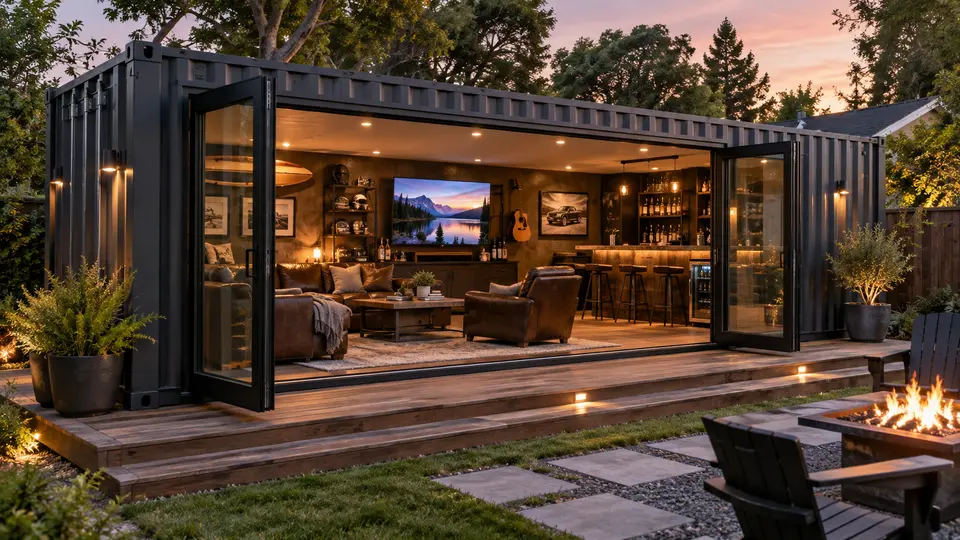
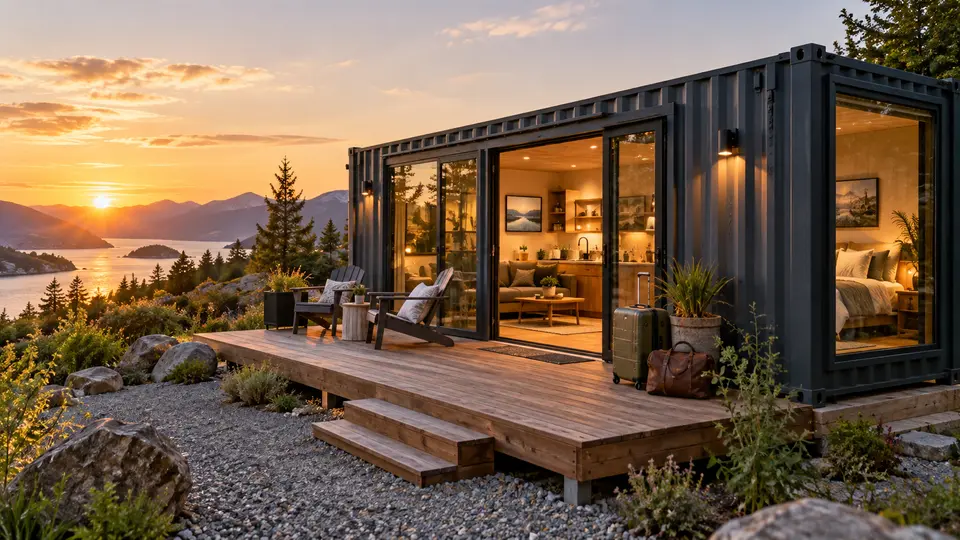
A shipping container Airbnb can stand out in a crowded list of short-term rentals, but novelty alone will not earn strong reviews. Guests still expect a comfortable bed, an easy arrival, a clean bathroom, reliable climate control and a layout that works once their luggage is inside.
The strongest container rentals use the steel form as part of a well-planned experience. They pair a compact interior with a useful outdoor area, clear views, privacy and practical amenities. Before investing, owners also need to confirm that short-term rentals and container construction are allowed on the property.
Design for the Guest Experience
Work backward from the stay you want to offer. A weekend retreat may prioritize a memorable bedroom, generous shower and private deck. A business-travel rental may need a desk, fast internet and simple parking. A family-oriented unit needs different sleeping and storage arrangements.
Avoid filling the room with decorative features that crowd the floor plan. Guests notice where their suitcase goes, whether they can move around the bed and if the bathroom has enough hooks and counter space. Small operational details matter more than an elaborate rendering.
Make the Interior Perform in Every Season
Steel responds quickly to outdoor temperatures. Insulation, air sealing, ventilation and properly sized HVAC should be designed as one system for the local climate. Moisture control is especially important in humid regions and in a frequently occupied rental.
Durable finishes and accessible mechanical components simplify turnovers and maintenance. Owners should plan for housekeeping storage, replacement linens, trash handling and safe exterior lighting without taking valuable guest space away from the layout.
Check the Business Rules Before Building
Verify zoning, building permits, occupancy requirements, parking rules and any local short-term-rental licensing before purchasing a container. Neighborhood covenants and insurance requirements can add another layer of restrictions.
Create a realistic budget that includes the container, design, engineering, foundation, utilities, modifications, finishes, furnishings, site work and ongoing operations. The shell is one cost within the complete project, not a shortcut around the rest of the building process.
Questions to Answer Before You Start
- Are short-term rentals allowed at the address?
- Who is the ideal guest and what do they need?
- How will cleaning and maintenance supplies be stored?
- Can utilities reach the site economically?
- What makes the stay distinctive after the novelty wears off?
Turn the Concept Into a Site-Specific Plan
Residential use brings requirements that an inspiration image cannot resolve. A qualified local team should confirm zoning, foundation design, structural reinforcement, energy performance, emergency egress, plumbing, electrical work and sanitation for the specific property. Plans found online should be treated as ideas until they are adapted and approved for the site.
Build the complete project budget before choosing finishes. Site work, utilities, professional design, permits, lifting, openings, reinforcement, insulation and interior systems can represent more of the investment than the container shell itself.
Choose the Container Condition With the End Use in Mind
Customer-facing projects generally benefit from a cleaner-looking shell. Compare One Trip and Cargo Worthy conditions based on the exterior finish plan, desired appearance and project budget. Review the Conex Xpress container condition guide for the differences among One Trip, Cargo Worthy and Wind and Water Tight containers.
Related Container Ideas
Plan the Container and Delivery
Confirm zoning, permits, foundation requirements, utilities and professional design needs before purchasing or modifying a container. When you are ready to discuss size, condition, quantity, delivery location and timing, request a quote from Conex Xpress.
Before delivery day, verify the route from the road to the placement area, including gates, turns, slopes, overhead lines and tree limbs. The final location should be accessible, level and prepared for drainage. Sharing photos and accurate measurements early helps the delivery team evaluate placement without relying on assumptions.