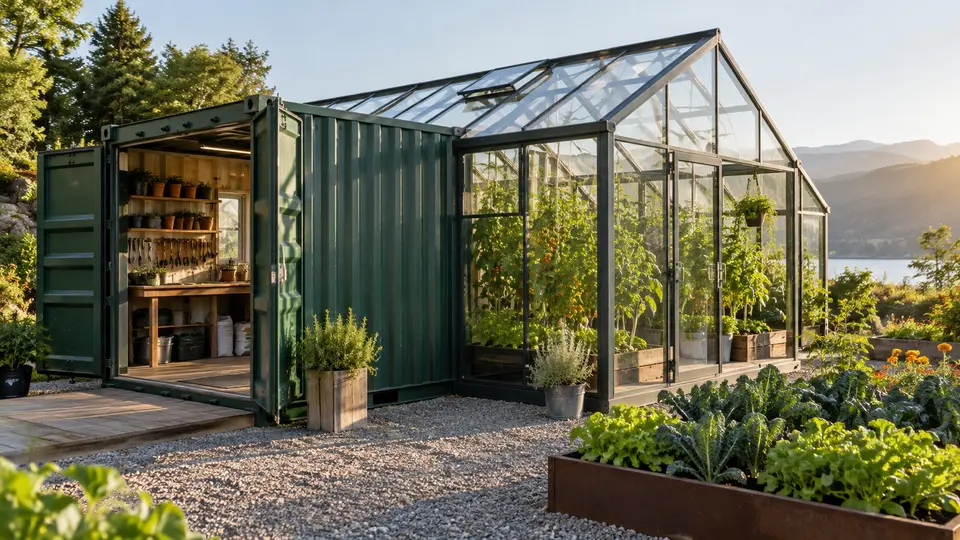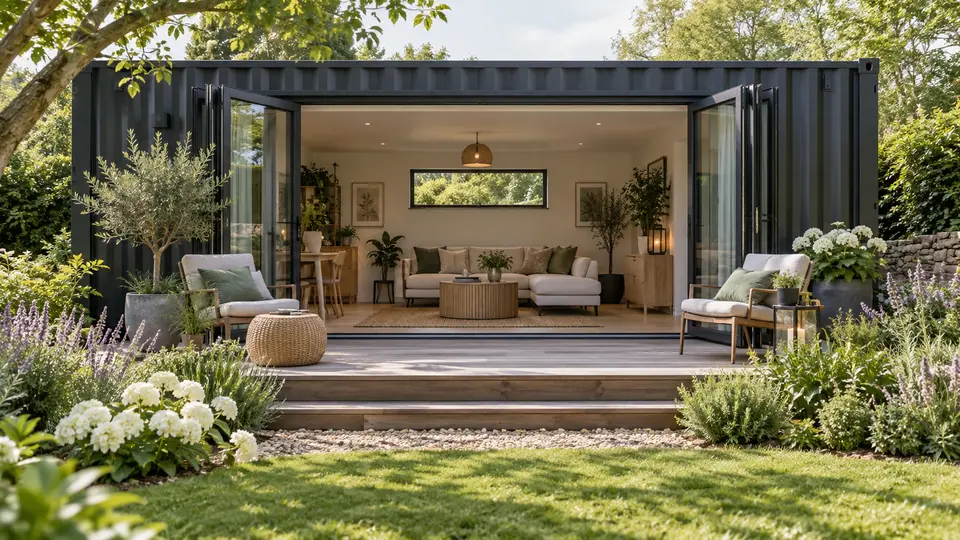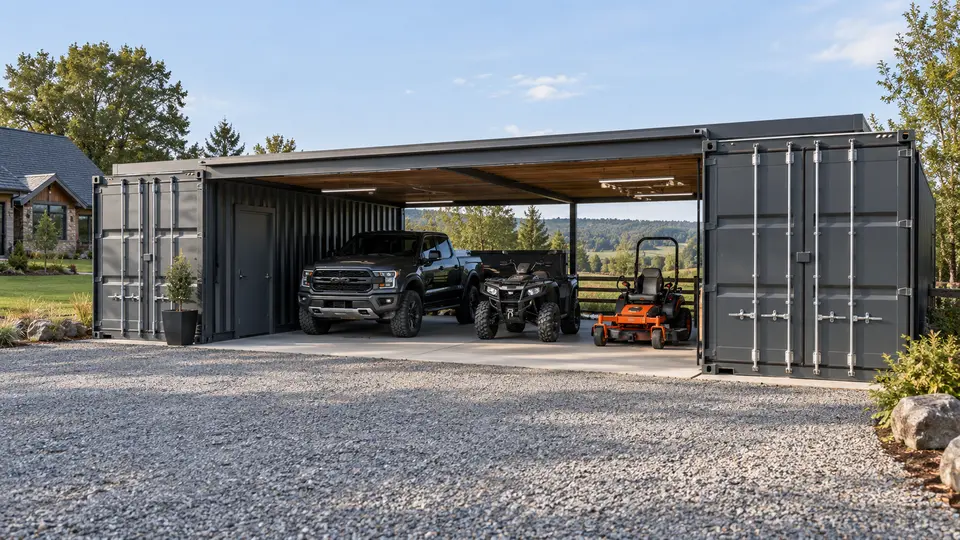
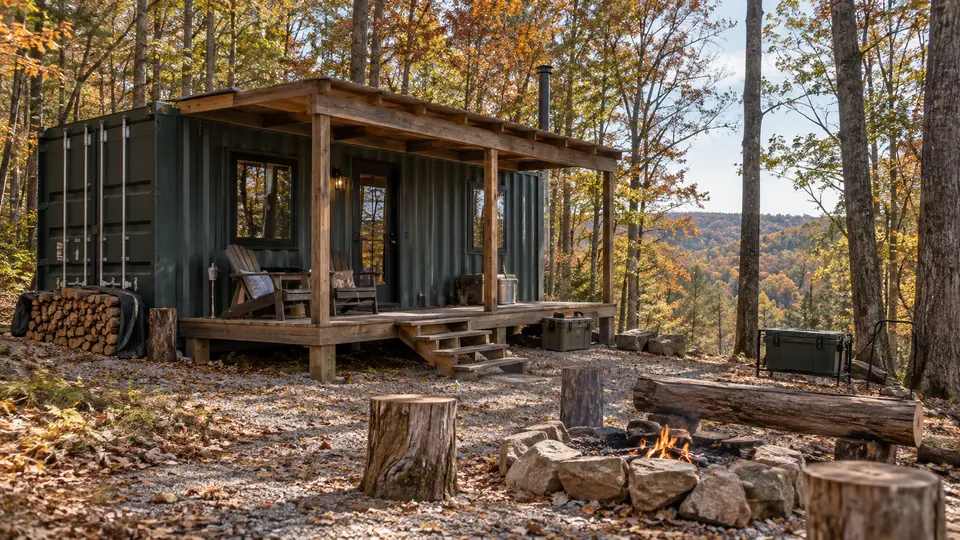
A container cabin can provide a compact base camp on a hunting lease, wooded acreage or weekend property. The original cargo doors offer security when the cabin is vacant, while the steel shell can support a layout that combines sleeping space with gear storage and a sheltered outdoor area.
Remote settings add practical constraints. Site access, power, water, wastewater, weather exposure and emergency access may be more important than interior finishes. A good plan starts with how the property actually functions throughout the year.
Separate Clean Living Space From Gear
Hunting clothes, muddy boots and tools need a transition zone. A covered entry, exterior locker or small mudroom area can keep the sleeping space cleaner. Inside, vertical racks and overhead shelving use the container’s height without narrowing the main walkway.
If several people will share the cabin, built-in bunks and under-bed storage can be more efficient than freestanding furniture. Keep a clear path to the exit and have sleeping arrangements reviewed for applicable safety and occupancy requirements.
Plan for Remote Utilities
Some properties can connect to conventional utilities; others require solar power, a generator, water storage or an approved onsite wastewater solution. Each system needs space, ventilation, maintenance access and protection from weather and wildlife.
Do not treat an off-grid setup as automatically permit-free. Local authorities may regulate the structure, electrical work, sanitation and occupancy even when utility connections are not conventional.
Prepare for Delivery and Long Periods Without Use
Rural roads, gates, soft ground, slopes and tree cover can limit delivery. Evaluate access in wet conditions and identify a level placement area with good drainage before the truck arrives.
When the cabin is vacant, ventilation, pest control and moisture management continue to matter. Use secure closures, protect exterior equipment and create a shutdown checklist for water and power systems.
Questions to Answer Before You Start
- Can a delivery truck reach the site safely?
- Will the cabin be occupied overnight and require permits?
- How will water and wastewater be handled?
- Where will wet gear and equipment be stored?
- What systems must keep operating while the cabin is vacant?
Turn the Concept Into a Site-Specific Plan
Residential use brings requirements that an inspiration image cannot resolve. A qualified local team should confirm zoning, foundation design, structural reinforcement, energy performance, emergency egress, plumbing, electrical work and sanitation for the specific property. Plans found online should be treated as ideas until they are adapted and approved for the site.
Build the complete project budget before choosing finishes. Site work, utilities, professional design, permits, lifting, openings, reinforcement, insulation and interior systems can represent more of the investment than the container shell itself.
Choose the Container Condition With the End Use in Mind
A cabin’s finish goals should drive container condition. One Trip may suit a polished retreat, while Cargo Worthy or Wind and Water Tight may fit a rugged, storage-forward project when cosmetic wear is acceptable. Review the Conex Xpress container condition guide for the differences among One Trip, Cargo Worthy and Wind and Water Tight containers.
Related Container Ideas
Plan the Container and Delivery
Confirm zoning, permits, foundation requirements, utilities and professional design needs before purchasing or modifying a container. When you are ready to discuss size, condition, quantity, delivery location and timing, request a quote from Conex Xpress.
Before delivery day, verify the route from the road to the placement area, including gates, turns, slopes, overhead lines and tree limbs. The final location should be accessible, level and prepared for drainage. Sharing photos and accurate measurements early helps the delivery team evaluate placement without relying on assumptions.