A shipping container man cave can create a dedicated place to watch a game, work on a hobby, display a collection or simply get out of the main house for a while. Unlike a spare bedroom that still has to serve several purposes, a container can be planned around exactly how the owner wants to use it.
The steel shell is compact, durable and easy to recognize, which is part of the appeal. But the best container retreats are more than a television and a chair placed inside a metal box. Comfort, ventilation, power, storage and safe modifications all need to be part of the design.
Choose the Purpose Before the Features
Start by deciding what will happen in the space most often. A sports room needs good sight lines and seating. A music room needs acoustic planning. A woodworking or automotive hobby space needs task lighting, durable surfaces and ventilation. A lounge may prioritize a small bar, comfortable seating and indoor-outdoor access.
Trying to fit every possible feature into one container can make the room feel cluttered. Choose one primary use and one or two supporting functions. That decision will guide the container size, door and window placement, electrical needs and storage plan.
Ideas for a Shipping Container Man Cave
Game-Day Lounge
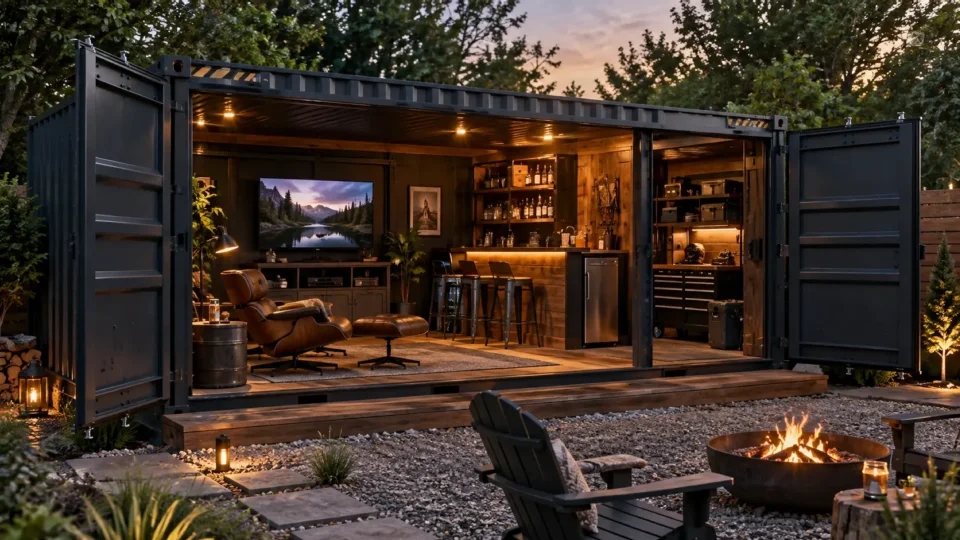
Mounting a television on one end wall preserves floor space and creates a clear focal point. A compact sofa, club chairs or a built-in bench can provide seating without blocking circulation. Add dimmable lighting and concealed storage for electronics, games and extra chairs.
Workshop and Project Room
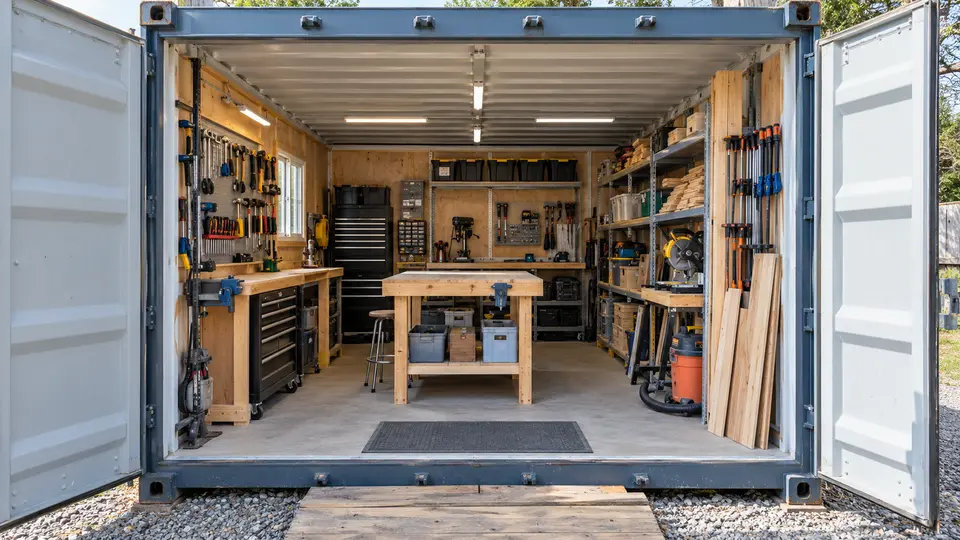
A container can organize tools and supplies while keeping noisy or messy projects out of the house. Wall-mounted storage takes advantage of vertical space, while a long workbench suits the container’s linear shape. If the work creates dust, fumes or heat, a qualified professional should design the ventilation and electrical systems for the intended equipment.
Music or Listening Room
A narrow room can become an intimate listening space, but bare steel is highly reflective. Insulation, finished wall assemblies and acoustic treatments help control sound inside the container. Location also matters if the goal is to keep music from disturbing neighbors or the household.
Collector’s Room
Display shelving, controlled lighting and secure doors can turn a container into a dedicated home for sports memorabilia, records, models or outdoor gear. Climate control may be essential for collections that are sensitive to heat and humidity.
Indoor-Outdoor Retreat
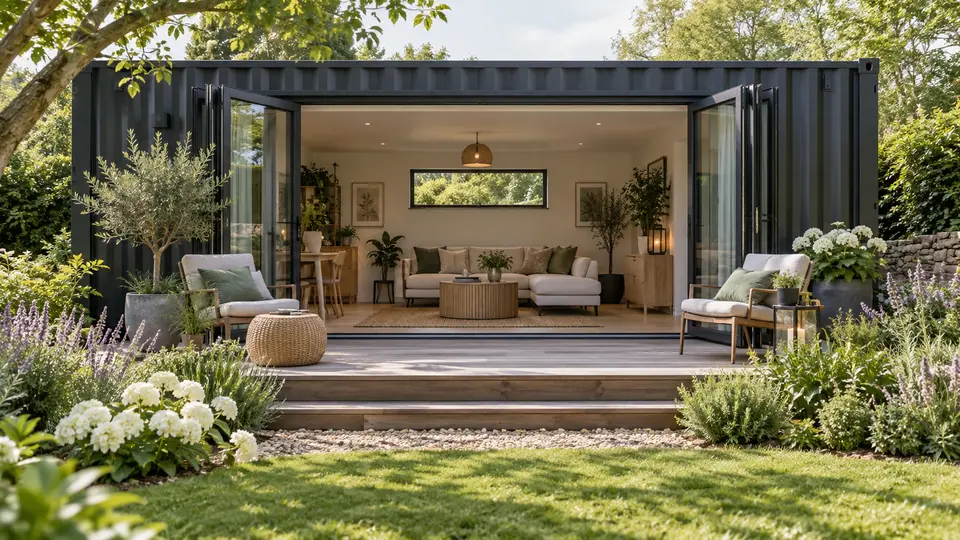
Adding a deck or patio outside the container creates room to gather without crowding the interior. Glazed doors can connect the spaces visually, while an awning or independent roof provides shade. Any large wall opening must be professionally engineered and reinforced.
20-Foot or 40-Foot Container?
A 20-foot container is often enough for a focused lounge, office or hobby room. Its smaller footprint is easier to place on many properties and encourages a disciplined layout. A 40-foot container provides more flexibility for distinct zones, such as seating at one end and a bar, gaming table or workbench at the other.
High-cube containers provide additional headroom, which can be valuable after insulation, wiring and ceiling finishes are installed. Measure the planned furniture and equipment before choosing a size. A floor plan that looks generous on paper can tighten quickly once cabinets, seating and circulation are accounted for.
What Makes the Space Comfortable?
- Insulation: A complete insulation and moisture-management strategy helps control heat, cold and condensation.
- Heating and cooling: HVAC should be sized for the finished space, local climate, occupancy and equipment heat load.
- Electrical service: Plan for lighting, outlets, televisions, refrigerators, tools and any future additions.
- Ventilation: Fresh-air and exhaust needs depend on whether the space is a lounge, workshop, gym or music room.
- Security: Doors, windows, locks and exterior lighting should suit the property and the items stored inside.
Conex Xpress offers custom container modifications for purpose-built spaces, including options such as insulation, HVAC, electrical systems, windows, doors, flooring and interior finishes. Discuss the intended use early so the layout and systems can be evaluated together.
Pick the Right Container Grade
For a finished backyard space where appearance matters, a One Trip container is often worth considering. A Cargo Worthy container can offer a practical balance for a project that will receive exterior prep and paint. A Wind and Water Tight container may make sense for a more utilitarian workshop or storage-focused retreat when cosmetic wear is acceptable.
Read the container condition guide to compare the grades. Local permitting and code requirements should also be confirmed before purchase or modification, even when the space is not intended as a residence.
Turn the Idea Into a Practical Plan
Sketch the furniture, equipment and storage at scale. Confirm utilities and drainage, choose a stable level location and make sure delivery equipment can access the site. Then have qualified professionals review structural openings, foundations and building systems.
A man cave is only one possibility. See what else can be built with shipping containers, or request a quote from Conex Xpress when you are ready to discuss the container size, condition, delivery location and intended use.