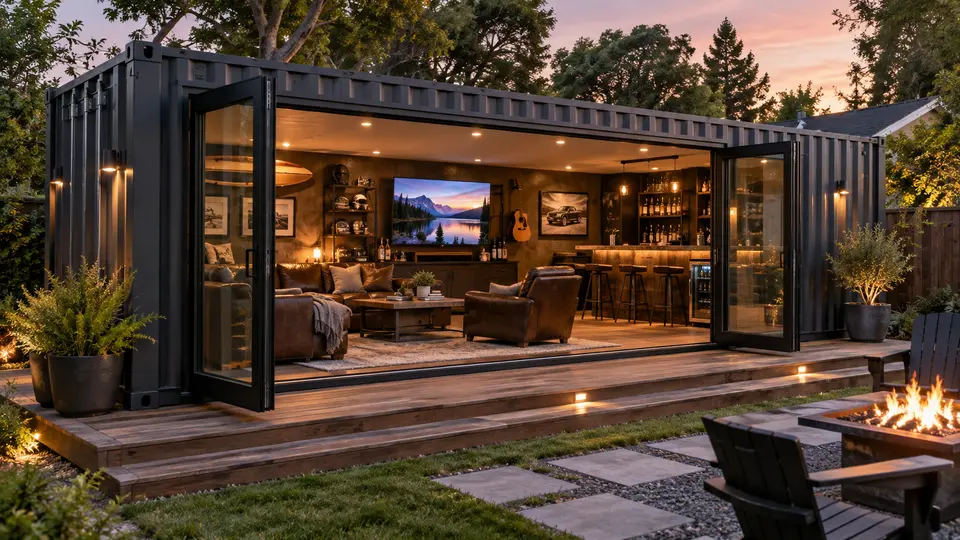
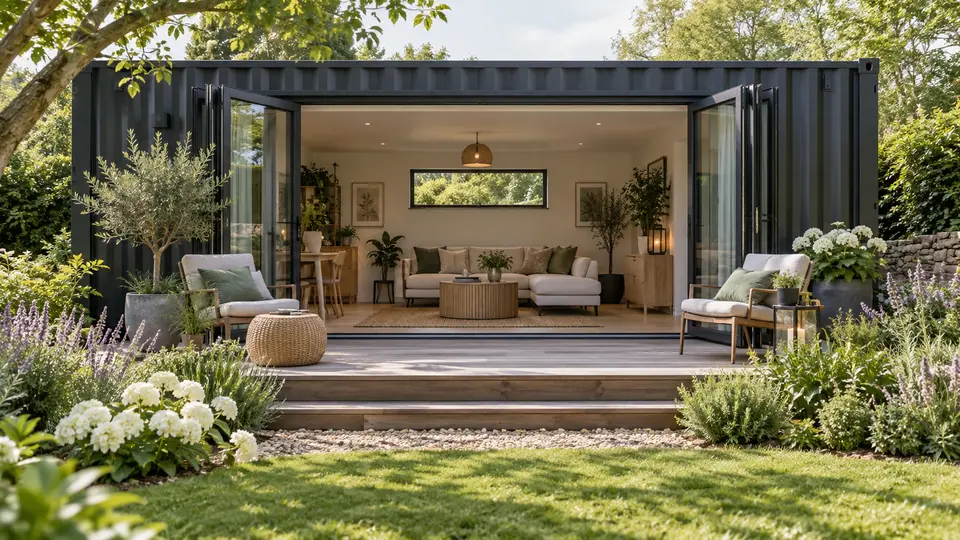
A shipping container garden room can create a sheltered place to read, entertain, work on plants or enjoy the yard in less-than-perfect weather. Unlike a storage shed, the goal is a finished room that feels visually connected to the landscape.
That connection comes from placement, carefully designed openings and an outdoor area that works with the interior. The garden should not merely surround the container; it should help shape how the room is approached and used.
Frame the Best View
Walk the property at different times of day before choosing an orientation. Morning sun, afternoon heat, privacy and seasonal views may point to a different placement than the shortest delivery route.
Large windows or doors can frame the garden, but they also affect heat gain and the container’s structure. A designer should balance glass, shading and reinforcement rather than treating the entire sidewall as disposable.
Give the Room a Clear Purpose
A quiet reading room needs comfortable seating and soft light. A potting room needs washable surfaces, water access and storage. An entertaining space needs circulation between indoor seating and the patio.
Choose materials that tolerate the way the room will be used. Soil, wet shoes and frequent open-door use may call for different flooring and entry details than a conditioned home office.
Blend Structure and Landscape
A deck, gravel terrace or paved path can soften the transition from the container threshold to the garden. Plantings can provide shade and privacy, but roots, irrigation and soil should not trap moisture against the structure.
Plan drainage around the foundation and direct roof runoff away from both the container and planting beds. Safe steps, railings and exterior lighting complete the connection.
Questions to Answer Before You Start
- Which view and time of day matter most?
- Will the room be conditioned year-round?
- Does the use require water or specialized storage?
- How will runoff move away from the foundation?
- Can delivery occur without damaging mature landscaping?
Turn the Concept Into a Site-Specific Plan
Move from inspiration to a scaled site plan before ordering a container. Confirm setbacks, utilities, drainage, foundations, delivery access and the permits that apply to the intended use. Openings and attachments should be reviewed by qualified professionals.
Plan the surrounding paths, lighting and outdoor surfaces at the same time as the container. A coordinated design is easier to build and maintain than a series of additions made after placement.
Choose the Container Condition With the End Use in Mind
A One Trip container often complements a polished garden setting. If the design includes full exterior cladding or refinishing, a qualified project team may also evaluate Cargo Worthy condition. Review the Conex Xpress container condition guide for the differences among One Trip, Cargo Worthy and Wind and Water Tight containers.
Plan the Container and Delivery
Confirm zoning, permits, foundation requirements, utilities and professional design needs before purchasing or modifying a container. When you are ready to discuss size, condition, quantity, delivery location and timing, request a quote from Conex Xpress.
Before delivery day, verify the route from the road to the placement area, including gates, turns, slopes, overhead lines and tree limbs. The final location should be accessible, level and prepared for drainage. Sharing photos and accurate measurements early helps the delivery team evaluate placement without relying on assumptions.